Professional Sofa Cleaning Gives Your Home a Fresh Start Before Fall Entertaining
AI Assistant · 2026-09-19
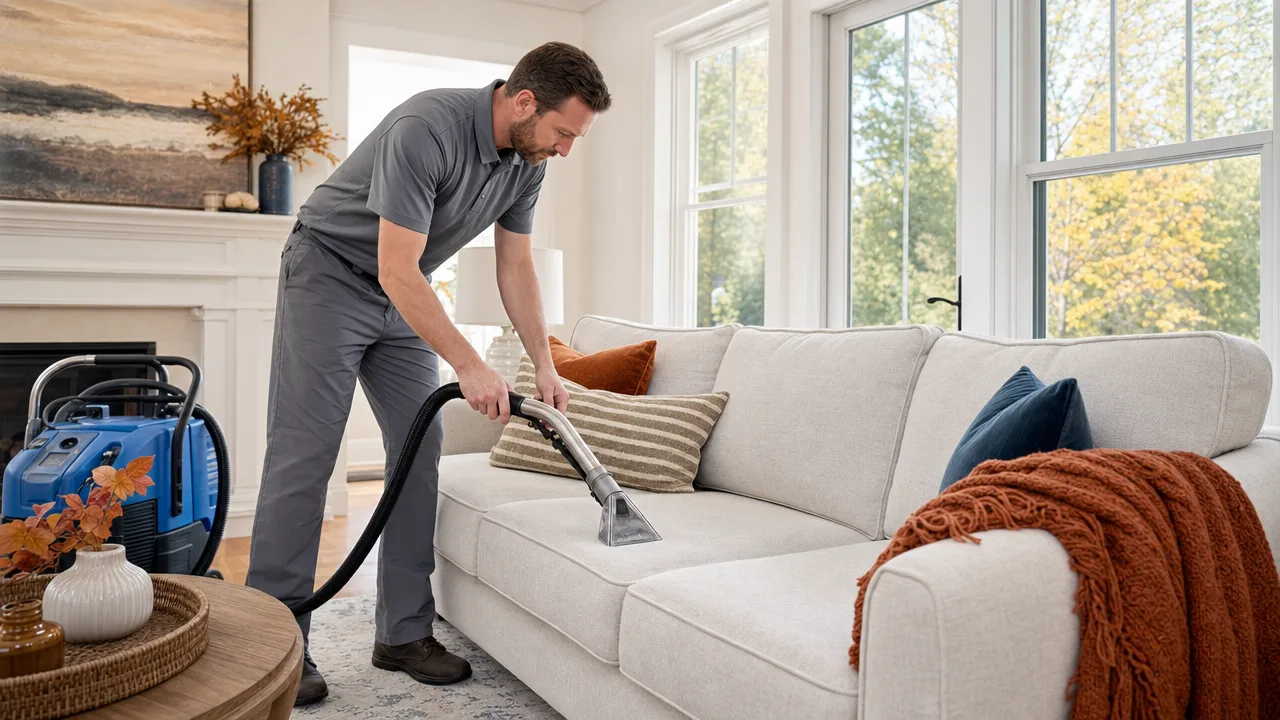
Learn what happens during professional sofa cleaning with hot water extraction, from inspection and pre-treatment to drying and aftercare. It is a practical way to refresh upholstered seating before fall entertaining.
Early fall is when sofas start working harder. Friends gather indoors, family movie nights return, and a couch that looked fine during summer can suddenly show every food crumb, pet hair patch, body oil mark, and old spill. Professional sofa cleaning gives upholstered seating a practical reset before your home becomes the place where everyone gathers.
At Skleanings, we use hot water extraction, often called steam cleaning, to deep clean sofas and other upholstered furniture. The process is designed to lift embedded soil from the fabric, rinse away cleaning solution, and remove as much moisture as possible so the sofa can dry properly. It is a more thorough approach than spraying a fabric freshener or wiping the surface with a store-bought cleaner.
Here is what actually happens during a professional sofa cleaning visit, how to prepare, how long it takes, and what you can reasonably expect once the work is complete.
Why sofas need more than a quick surface clean
A sofa collects soil gradually, which is why many people do not notice the buildup until they are preparing for visitors. Upholstery fibers hold dust, skin oils, crumbs, hair, outdoor residue carried in on clothing, and oils from pets. Light-colored arms and headrest areas often darken first because those spots receive the most contact.
Spills are only part of the story. Even a sofa with no obvious stain can look dull or feel less fresh because fine dry soil has settled below the surface. Vacuuming helps with loose debris, but it cannot rinse oils and embedded grime from the upholstery.
That is where professional upholstery cleaning makes a noticeable difference. Hot water extraction works below the visible surface of the fabric. It is especially useful before fall entertaining when you want seating to look cared for, smell fresher, and feel ready for regular use.
A household upholstery spot cleaner can be fine for a brand-new, small spill if you act quickly and follow the furniture manufacturer's care label. Blot the spill, use minimal moisture, and test any product in an inconspicuous spot. For widespread dinginess, old spots, pet-related messes, or a sofa that has not been deep cleaned in a long time, professional sofa cleaning is usually the safer and more effective next step.
What hot water extraction means for sofa cleaning
Hot water extraction is frequently called steam cleaning, but the name can be confusing. The process does not mean blasting dry steam across the sofa. Instead, equipment applies a controlled amount of hot water and appropriate cleaning solution into the upholstery, then immediately extracts the loosened soil, solution, and moisture into a recovery tank.
The technician controls the amount of moisture used. Upholstery needs a careful approach because sofa cushions, seams, backing materials, and filling can all respond differently to water. The goal is deep cleaning with proper extraction, not soaking the furniture.
The basic sequence is straightforward:
Inspect the sofa fabric, condition, construction, and problem areas.
Vacuum away loose debris such as crumbs, dust, and pet hair.
Apply a suitable pre-treatment to loosen oils and soil.
Agitate selected areas as needed to help the solution work into the fibers.
Use hot water extraction to rinse the upholstery and recover soil and moisture.
Make extra drying passes and inspect the finished sofa.
This method is also used for deep carpet cleaning, but the tools, moisture level, and technique are adjusted for upholstery. Experienced professional carpet cleaners know that fabric furniture cannot be treated exactly like wall-to-wall carpet. The upholstery must be assessed first.
Step 1: The sofa inspection comes before the cleaning
The first part of a proper service is inspection. Before applying a product or starting extraction, we look at the sofa's fabric, color, cushions, seams, arms, back cushions, and visible areas of concern. We also check the care tag when it is available.
This matters because upholstery is not all the same. Some fabrics tolerate water-based cleaning well, while others require a different approach or may have limitations. Certain natural fibers, delicate materials, unstable dyes, and older upholstery can carry more risk. A professional should never assume that every sofa can receive the same treatment.
During the inspection, it helps when customers point out anything they are concerned about, even if it seems minor. Mention old beverage spills, greasy marks, pet accidents, makeup, ink, food, or previous attempts at DIY cleaning. Those details affect treatment decisions.
We also set realistic expectations before beginning. Deep cleaning can significantly improve many common soils and stains, but no honest company can promise every mark will disappear. Some stains permanently alter dye, some have been heat set, and some previous cleaning products leave residue that changes how the fabric responds. The right goal is the best safe improvement possible, not an unrealistic promise.
Step 2: Preparing the work area and protecting the surrounding space
Once the sofa is assessed, the work area is prepared. The technician needs clear access around the furniture, room to operate equipment, and a safe route to bring hoses and tools in and out. If possible, move coffee tables, floor lamps, ottomans, throws, and personal items away from the sofa before the appointment.
You do not need to move a heavy sofa yourself unless it is safe and easy to do so. The important thing is to clear the immediate area and remove loose objects from the cushions. Check between seat cushions for remotes, coins, toys, pens, crumbs, and anything else that might be hiding there.
For the best visit, customers should also:
Secure pets in a comfortable separate room while equipment and doors are in use.
Let us know about difficult parking, stairs, building access, or other entry details ahead of time.
Identify all stains and odors before cleaning begins.
Remove detachable cushion covers only if their manufacturer instructions say they are removable and washable. Do not machine wash them just before the appointment.
Plan to keep children and pets off the sofa until it is dry.
If your fall entertaining plans include a larger upholstered piece, such as an L-shaped couch or oversized seating arrangement, the same preparation applies. Skleanings offers cleaning for several sofa sizes and configurations. You can review our upholstery and carpet cleaning services before choosing the option that fits your furniture.
Step 3: Dry soil removal makes the deep clean more effective
Vacuuming is not a substitute for extraction, but it is an important part of the process. Loose dry soil becomes mud when moisture is introduced, so removing it first helps the rest of the cleaning work better.
We vacuum creases, cushion edges, seams, and the spaces under removable cushions where debris tends to collect. This step is particularly important in homes with pets, young children, or frequent snacking on the couch.
Customers are often surprised by how much dry material is sitting under cushions even when the sofa is used every day. Removing it improves the result and prevents loose debris from being worked into the fabric during wet cleaning.
Step 4: Pre-treatment targets the soil you cannot see
After vacuuming, an upholstery-safe cleaning solution is applied to loosen body oils, tracked-in soil, food residue, and other grime attached to the fibers. Arms, headrests, front edges, and favorite seat cushions often need special attention because these high-contact areas collect the most oil.
Pre-treatment needs a few minutes of dwell time to do its job. It is not simply sprayed on and immediately extracted. During this time, the solution begins breaking the bond between the soil and the fabric so it can be removed more effectively during hot water extraction.
Some spots may receive additional treatment. For example, a food spill, pet stain, or dark hand mark may respond differently from general soil. Pet stain removal is not always a one-step task, especially when a pet accident has reached cushion filling or has been sitting for some time. Be clear about where the incident happened and whether there is any remaining odor. That gives the technician the best chance to assess the situation honestly.
It is worth noting that odor and visible staining do not always match. A spot may look clean but still have odor-causing residue below the surface. On the other hand, a visible old stain may remain partly noticeable after the source material has been removed because it changed the fabric's color.
Step 5: Gentle agitation works the solution into the upholstery
Depending on the sofa fabric and soil level, the pre-treatment may be gently worked through the fibers with an upholstery brush or other appropriate tool. This helps lift dirt from the areas that receive regular contact without being overly aggressive on the fabric.
This is not a one-size-fits-all scrubbing process. Delicate upholstery and durable synthetic fabric call for different handling. The inspection at the beginning guides how much agitation is appropriate.
Attention usually goes to the sections people touch most: armrests, headrest areas, seat cushions, front rails, and the top of the back cushions. A sofa can look unevenly soiled after years of use because these contact zones age differently than less-used areas. Cleaning them carefully can help the overall appearance look more consistent.
Step 6: Hot water extraction rinses and recovers the soil
This is the central stage of professional sofa cleaning. A hand-held upholstery tool applies a controlled rinse and immediately vacuums the released soil and moisture away. The technician works systematically across the sofa rather than rushing randomly from one cushion to the next.
Passes are made over the upholstery with attention to seams and edges. The tool needs to maintain enough contact with the fabric to recover moisture effectively. Extra dry passes are often just as important as the rinse passes because good moisture recovery supports faster drying.
You may see dirty water collecting in the machine's recovery tank. That is a normal result of pulling out dissolved grime and moisture from the furniture. The exact appearance of recovery water does not tell the whole story about the sofa's cleanliness, but it often gives customers a clear picture of why surface wiping was not enough.
Hot water extraction is one reason professional cleaning can produce a fresher result without heavily perfuming the sofa. The aim is to remove the source of everyday soil, not mask it with fragrance.
Step 7: Final grooming, touch-ups, and a realistic results check
Once extraction is complete, the upholstery is inspected again. The technician may make additional extraction passes in a heavily used area, address a remaining spot if it is safely treatable, and groom the fabric so it dries evenly and looks consistent.
This is also when you should look over the sofa with the technician. It is better to discuss a concern immediately than wait until later. Keep in mind that damp fabric can look different from dry fabric. Some areas may look darker temporarily because they are still moist, and the final appearance becomes clearer after drying.
For a sofa with removable cushions, cushions are usually placed to allow air to circulate. They should stay in position unless you are instructed otherwise. Avoid sitting on the sofa until it has dried fully, since pressure from use can slow drying and transfer moisture to clothing.
How long professional sofa cleaning and drying usually take
The cleaning time depends on the size of the sofa, the number of cushions, fabric type, amount of soil, and the number of stains that need attention. A standard three-seat sofa with average use generally takes less time than a large multi-piece couch with multiple heavily soiled cushions. Inspection, vacuuming, pre-treatment, extraction, and final review are all part of the appointment.
Drying time also varies. Many sofas are dry within several hours, but it can take longer in humid weather, with thick cushions, dense upholstery, or limited airflow. Early fall in the Framingham area can bring changing temperatures and humidity, so it is wise to schedule with enough time before guests arrive. Booking a day or two before entertaining is more practical than waiting until the same afternoon.
To support drying, keep the room comfortably ventilated. Run your HVAC system if appropriate, use ceiling fans or portable fans, and avoid covering the sofa with blankets or throws while it is still damp. Do not turn up the heat excessively or use direct high heat on the upholstery.
What you will notice after a deep sofa cleaning
A properly cleaned sofa often looks brighter and more even, particularly on arms and cushions. The fabric may feel less gritty, loose debris will be gone, and everyday odors may be noticeably reduced. Many customers also find that the room as a whole feels fresher once the largest upholstered item in it has been deep cleaned.
What you may not see is also important. Hot water extraction removes built-up soil that vacuuming and surface sprays leave behind. That deeper reset is valuable before guests spend time sitting, eating, and relaxing in your home.
Results depend on the sofa's condition. Fading, worn fibers, fabric damage, permanent dye loss, and deeply set stains may remain. Cleaning improves cleanliness. It cannot reverse physical wear or restore a fabric that has been permanently altered.
How to keep the sofa looking good through fall
After professional cleaning, simple habits help protect the result. Vacuum the sofa regularly with an upholstery attachment, especially along seams and under cushions. Blot spills right away instead of rubbing them. Rotate reversible cushions when the furniture manufacturer allows it, and keep pet blankets clean if pets regularly sit on the couch.
Avoid applying random spot products to an old stain without testing. Overwetting upholstery or leaving soap behind can create rings, sticky residue, or a spot that attracts new dirt. If a stain returns after it dries, it may be residue wicking upward from deeper in the fabric or cushion. The same principle can occur with floor coverings. Our guide on why carpet stains can reappear after steam cleaning explains how wicking works and why proper treatment matters.
If the sofa is a centerpiece for upcoming guests, book before your calendar fills up. Skleanings customers can book sofa cleaning online in under a minute.
When sofa cleaning should be paired with another service
This visit should stay focused on your sofa, but it is common for customers to notice other soft surfaces that need attention once the upholstery is fresh. Carpet cleaning can help with soil tracked through the same room, and mattress cleaning is available when a bed needs a hygienic deep clean. We also clean larger upholstered seating, including sectional cleaning, when the entire seating area needs attention.
These services can be useful, but they should be selected based on the actual condition of each item. A clean sofa does not automatically mean every carpet needs extraction, and a carpet stain does not necessarily mean the whole home needs cleaning. The practical approach is to address the items that have visible soil, odor, heavy traffic, or a specific hygiene concern.
Frequently asked questions about professional sofa cleaning
Is hot water extraction the same as steam cleaning?
People commonly use the terms interchangeably. Hot water extraction is the more accurate description of the process used for deep cleaning. It applies a controlled hot rinse and extracts soil and moisture, rather than simply applying dry steam to the upholstery.
Will professional sofa cleaning remove every stain?
No. Many common food, drink, body oil, and everyday soil marks improve substantially, but some stains are permanent. Age, fabric type, previous cleaning attempts, dye damage, and heat exposure all affect results. A professional inspection helps set realistic expectations before work begins.
Can you clean a sofa with pet stains?
Pet stains can often be treated, but results depend on how old the stain is, how much material reached the cushion, and whether it has affected the backing or filling. Point out every known area before cleaning begins. Odor removal may be limited if contamination is deep inside the furniture.
How long before I can sit on the sofa?
Wait until it is fully dry. Many sofas dry in several hours, though dense fabric, thick cushions, humidity, and limited airflow can extend that time. Fans and normal indoor airflow can help.
Should I clean my sofa before fall entertaining?
Yes, if it has visible soil, lingering odors, stains, or has simply had a busy year of daily use. Schedule at least a day or two before visitors arrive so the sofa has time to dry completely and you can enjoy the fresh result without rushing.
How often should a sofa be professionally cleaned?
Frequency depends on use. Homes with pets, children, frequent guests, or everyday eating on the sofa may benefit from more frequent upholstery cleaning. For lower-use furniture, clean when you notice dullness, odors, soil buildup, or spots that are not improving with careful spot treatment.