How to Remove Body Oil Buildup From an Armchair With Upholstery Cleaning This Fall
AI Assistant · 2026-09-27
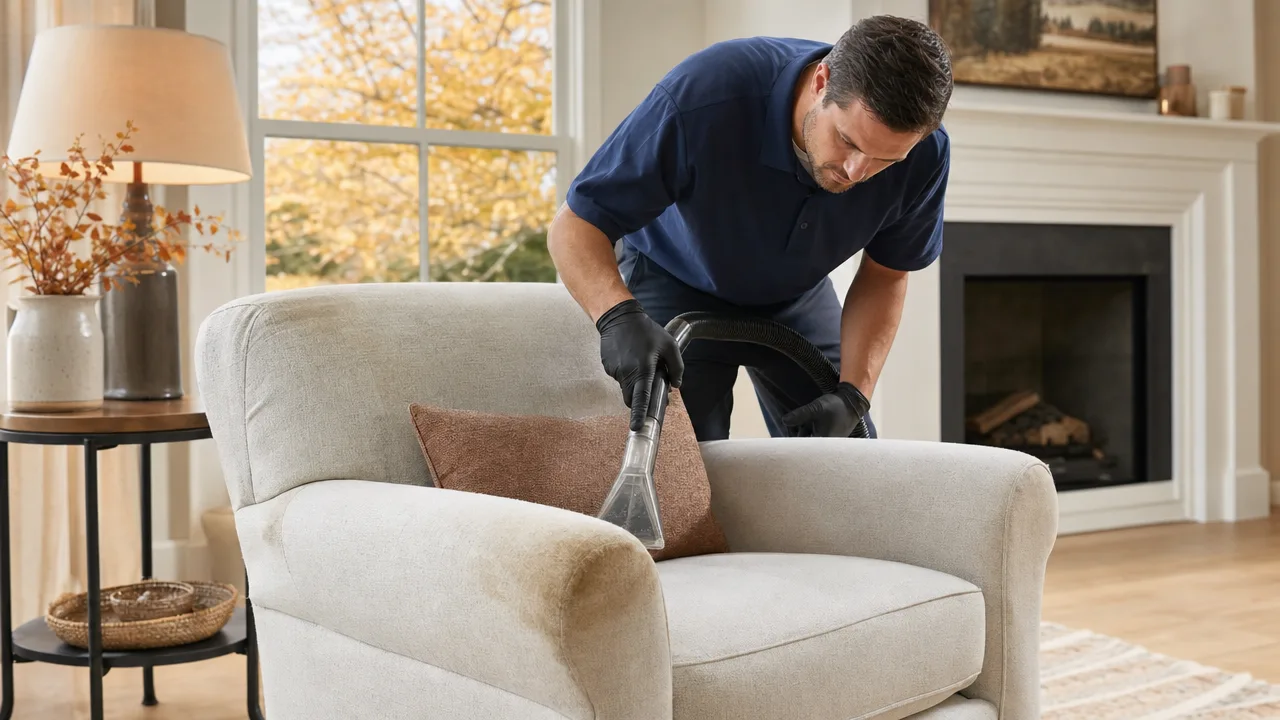
Learn how to safely remove body oil buildup from an armchair, what DIY methods can handle, and when professional upholstery cleaning is the better choice this fall.
Body oil buildup is one of the most common reasons an armchair starts looking darker, duller, or greasy around the arms, headrest, and seat edge. It develops gradually from skin oils, hair products, lotion, sweat, and everyday contact. By early fall, when more time is spent indoors, those high-touch areas can become especially noticeable.
The good news is that fresh, light buildup can sometimes be improved at home. Heavy discoloration, sticky residue, or an odor that returns after spot cleaning usually needs professional armchair upholstery cleaning . The key is using the right amount of moisture and cleaning solution for the fabric instead of scrubbing harder or soaking the chair.
Why body oil leaves dark marks on armchairs
Body oils are not like a single spill that stays on the fabric surface. They bond with dust, dead skin, food crumbs, and airborne soil over time. This creates a grimy film that can make one arm look much darker than the rest of the chair.
Armrests and headrests are usually affected first. A favorite reading chair may also have buildup on the outer seat cushion, where hands and legs repeatedly touch the upholstery. Light-colored fabric often shows the problem quickly, but darker upholstery can feel stiff or look shiny before the soil becomes obvious.
Regular vacuuming helps remove dry debris, but it will not fully break down oily residue. That is why body oil buildup often needs a fabric-safe pre-treatment followed by thorough extraction.
What to do first
Before applying any cleaner, check the manufacturer tag beneath the cushion or chair frame. Upholstery tags may include cleaning codes such as W, S, WS, or X. These codes matter because some fabrics tolerate water-based cleaning while others may be damaged by it.
W: Generally suitable for water-based upholstery cleaning.
S: Requires a solvent-based approach and should not be saturated with water.
WS: May allow water-based or solvent-based products, with careful testing.
X: Vacuum only. Professional assessment is the safest option.
If there is no tag, treat the fabric cautiously. Vacuum the chair first using an upholstery attachment. Pay close attention to seams, piping, creases, and the space between cushions, where dry soil collects and can turn muddy during cleaning.
How to clean light body oil buildup at home
A DIY approach can be enough when the buildup is mild, the fabric is labeled W or WS, and there is no strong odor or widespread discoloration. Always test any product on a hidden area first, such as the rear lower edge of the chair.
1. Blot, do not scrub
If an area feels oily, press a clean white microfiber cloth against it to lift surface residue. Avoid aggressive rubbing. Scrubbing can push soil deeper into the fibers, rough up the upholstery texture, and leave a larger visible ring.
2. Use a small amount of upholstery-safe cleaner
Apply a fabric-safe upholstery cleaner according to its label directions. Use the product sparingly on a cloth rather than spraying the armchair heavily. Work from the outside edge of the darkened area toward the center with gentle blotting motions.
3. Remove cleaner residue
Follow with a second cloth lightly dampened with clean water, again using as little moisture as possible. Remaining detergent can attract more soil, making the armrest look dirty again sooner.
4. Dry the chair completely
Use fans and good airflow. Keep people, pets, and throws off the chair until it is fully dry. Sitting on damp upholstery can transfer more oils and may create water marks.
What makes body oil buildup worse
The most common mistake is over-wetting the fabric. Household machines and spray cleaners can leave moisture deep in the padding when too much solution is used. That can cause slow drying, odor, browning, or a wavy appearance in some fabrics.
Do not use dish soap, laundry detergent, bleach, heavy degreasers, or stiff brushes on upholstery. These products may leave residue, fade color, damage fibers, or spread the oily area. Avoid steam from a handheld household device as well. Although people often use the term steam cleaning , professional upholstery cleaning is not simply blasting hot steam onto fabric.
When professional armchair upholstery cleaning is the better call
Professional cleaning is a smart choice when the dark areas cover both arms or the headrest, when the chair still feels greasy after DIY care, or when you do not know the fabric code. It is also the safer option for delicate materials, older upholstery, and chairs with attached cushions or detailed tufting.
Skleanings uses hot water extraction, often called steam cleaning, to deep clean suitable upholstered furniture. After appropriate inspection and pre-treatment, the process flushes loosened soil and cleaning solution out of the fabric instead of leaving it behind. Results depend on the fabric, the age of the buildup, previous products used, and whether the oils have changed the fibers or dyes, so no cleaner can honestly promise every dark mark will disappear.
For a chair that gets daily use, professional cleaning can reset the upholstery before the cooler indoor season. If other living room pieces have the same high-touch buildup, review the available upholstery cleaning services for armchairs, sofas, loveseats, and larger pieces. Sofa cleaning and sectional cleaning use similar soil-removal principles, but each piece should be assessed for its fabric and condition.
How to keep the armchair cleaner after treatment
Vacuum the chair every one to two weeks, including seams and cushion edges.
Use washable arm covers if one person consistently uses the same chair.
Keep hair products, hand lotion, and snacks away from upholstered arms when possible.
Address fresh spills promptly by blotting with a clean cloth.
Schedule deep upholstery cleaning when darkening and odors return, rather than repeatedly adding spot cleaner.
Carpet cleaning, carpet stain removal, and pet stain removal require different methods than body oil on upholstery. The same is true of mattress cleaning, which uses a hygienic process designed for mattresses rather than chair fabric. For a visibly dark, frequently used armchair, targeted upholstery cleaning is the practical place to start. When you are ready, you can book online in under a minute.